


Stories about USA

Australian PM Anthony Albanese adds to growing political pressure to #FreeJulianAssange
The Australian PM has finally talked about Julian Assange ... and while distancing himself from Assange’s well-motivated actions, has said he has raised it with representatives of the US administration.

Whistleblowing is a service to society: Interview with Disruption Network Lab director Tatiana Bazzichelli
Whistleblowers are painted as heroes or villains, but what motivates them? Global Voices spoke to Tatiana Bazzichelli, a writer who recently edited "Whistleblowing for Change," an anthology on the subject.
An interview with media scholar Rose Luqiu about WeChat and techno-nationalism
"A major factor is censorship or 'coerced loyalty.' As other communication tools like Facebook and Twitter are unavailable in China. WeChat has a very special [monopoly] status in China."

Is the shutting down of Chinese LinkedIn the end of foreign big tech’s engagement with China?
What are the reasons behind Microsoft's decision to leave China? Product failure? China' newly enacted data security law? or the proposing algorium law?

After Twitter labeled Serbian pro-government media: It is important to know who controls and exercises pressure on media
Top Serbian state officials accused Twitter of censorship after it posted labels on the profiles and tweet of media outlets that don't enjoy editorial independence from the government.

Holocaust denial should be considered hate speech, survivors demand of Facebook
Hate speech is a criminal offense in most European countries that experienced the horrors of World War II, but the US does not have such laws at the national level.
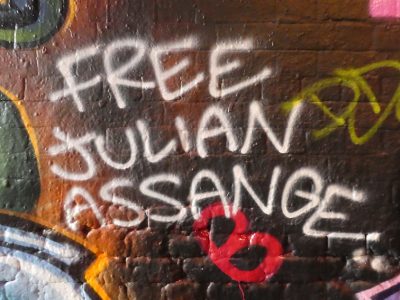
Julian Assange supporters rally to defeat extradition to United States
"The extradition to the US of a publisher and journalist, for engaging in journalistic activities while in Europe, would set a very dangerous precedent."

How the murder of musician Hachalu Hundessa incited violence in Ethiopia: Part I
In the wake of musician Hachalu Hundessa's murder, Ethiopia has struggled to come to terms with the violence and turmoil that erupted along ethnic and religious faultlines.

Moderate globally, impact locally: A series on content moderation in the Global South
''Even as the platforms have grown and spread around the world, the center of gravity of these debates continues to revolve around D.C. and San Francisco.''
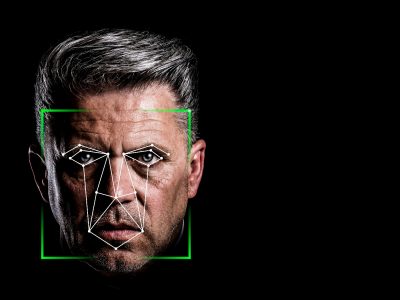
Black Lives Matter forces an IBM U-turn on facial recognition
In wake of Black Lives Matter protests, the company IBM has announced its withdrawal from the facial recognition software market

China to expel American journalists from three US news outlets, watchdog decries threat to press freedom
China announced it would expel American journalists working for the New York Times, the Wall Street Journal and the Washington Post. The ban would extend to Hong Kong and Macau.

‘Suspension won’t silence me’: Teen speaks out after embedding message about Xinjiang Uyghurs in TikTok makeup tutorial
Feroza Aziz used a makeup tutorial as a disguise to criticise China's treatment of Uyghurs on Tiktok.

South Park creators mock the NBA with a sarcastic apology to China
One single tweet about Hong Kong demonstrations is able to set a war of words between China and the US and to end NBA's business prospects in mainland China.
Netizen Report: Preventing bias or protecting extremism? Debunking the new US Senate proposal for Silicon Valley
Cuba bans citizens from using foreign web hosts, Iran's internet falters and The Guardian shows that even tourists are subject to targeted surveillance in western China.

‘Envision a new war': the Syrian Archive, corporate censorship and the struggle to preserve public history online
Social media companies are censoring images of war. The Syrian Archive is working to preserve them.
Netizen Report: If protecting your privacy is ‘part of a conspiracy,’ then we’re all in big trouble
Digital privacy tools draw suspicion in the US and Ecuador, India tackles Tiktok, and a Chinese man learns that facial recognition works -- even while you’re sleeping.

Censored on WeChat: Huawei, ZTE and ‘Amazing China’
The censorship of ZTE and Huawei has strong association with the censorship of "China-U.S trade war".

Censored on WeChat: As tensions in China-US trade conflict rose, so did WeChat censorship
The second installment in our series looks at the most censored topic in the 2018 WeChatscope dataset: the China-US trade war.

Users flood Reddit with China censorship memes, balk at $150 million investment from Tencent
While Chinese companies regularly invest in US media companies, this makes for an unusual match.
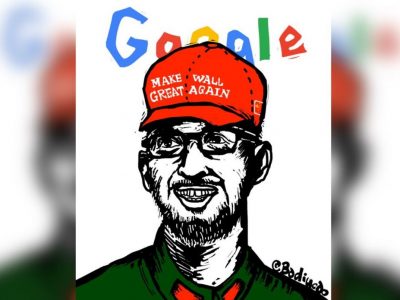
Chinese artist Badiucao sends ‘Make Wall Great Again’ hats to Google, in protest of company's return to China
“I want [Google] to know it is a mistake to collaborate with China’s censorship. It is as shameful as Trump’s wall ... an invisible wall online — the great firewall.”