

Latest posts by Jae Yeon KIM

South Korea: Naver Provokes Push for Portal Regulation
Conservative party politicians and major news organizations are pushing for new regulatory measures aimed at Naver, South Korea's leading search and online content provider. In addition to dominating online advertising and content markets, Naver has been accused of prioritizing its own content in search results.

South Korean Politician Moves to Repeal Biased Copyright Law
On Friday, South Korea's National Assembly will meet with supporters and opponents of the country's "three strikes" law, including Assembly Member Mr. Choi Jae-Cheon, who has moved to repeal provisions of the law that allow authorities to disable a person's web service account or shut down his or her website for violating copyright regulations.

South Korea: Stricter Online Games Regulations Face Discontent
The South Korean government in on the offensive against online games addiction. But the policy is increasingly controversial among South Korean youth, says our author Jae Yeon Kim.
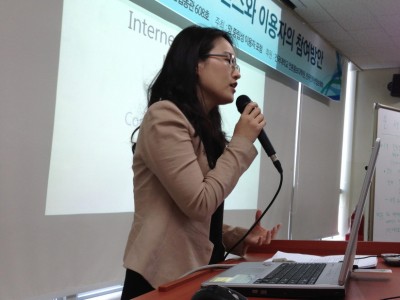
South Korea: How to Regain Ownership of the Internet
On January 11, 2012, Network Neutrality Forum, an alliance of South Korean Internet freedom-concerned civic organizations, hosted a public workshop to discuss ways to increase civic participation in global Internet governance. Our author Jae Yeon Kim participated in the meeting and has this report.

South Korea: Public Interest in Internet Governance Issues Rekindled
On January 3, 2013, Creative Commons Korea co-organized a public event on Internet governance entitled “Global Great Power Rivalries on the Internet”. The meeting was especially focused on the outcome of the recent World Conference on Information Technology.

South Korea: Perspectives on Chinese New Net Control Laws
On December 28, 2012, the Chinese government approved a set of new net control laws that would make it compulsory for internet intermediaries to enforce users' real name registration. In South Korea, a similar online real name registration policy has been in place since 2005. Let's examine the South Korean experiment and see what lessons Chinese netizens can learn from it.